
Owners & PMsCommercial ▾
HomeownersResidential ▾
Builders & GCsNew Construction ▾
GuidesResources ▾
CompanyAbout ▾
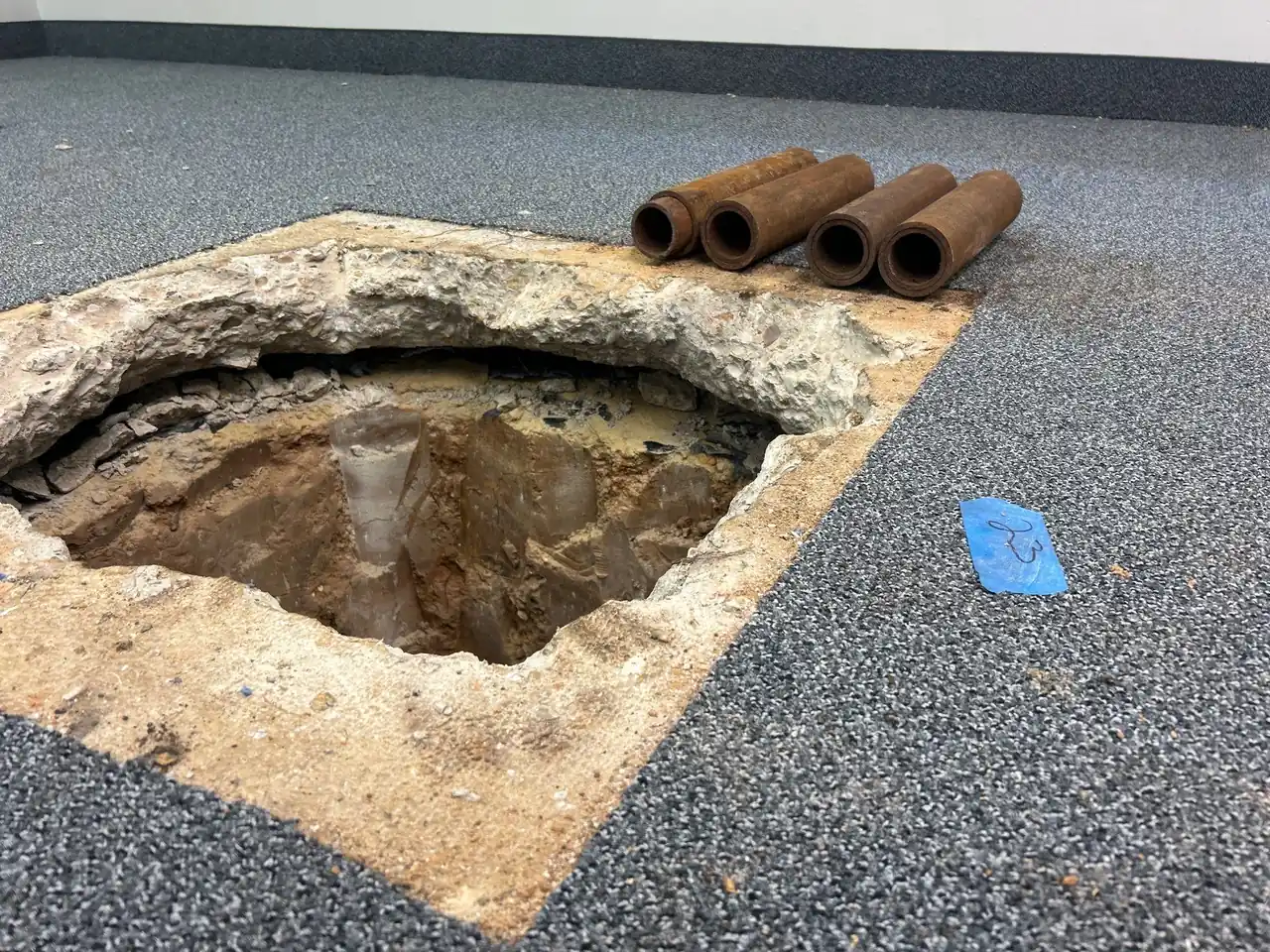
Why steel for commercial loads
Capacity and depth. Each pier is hydraulically driven until the strata itself refuses further advance, verified pier by pier during installation, then load-tested against the structure it will carry. In North Texas expansive clay, that puts commercial loads on ground that does not move with the weather, which is the difference between a repair and a recurring line item.
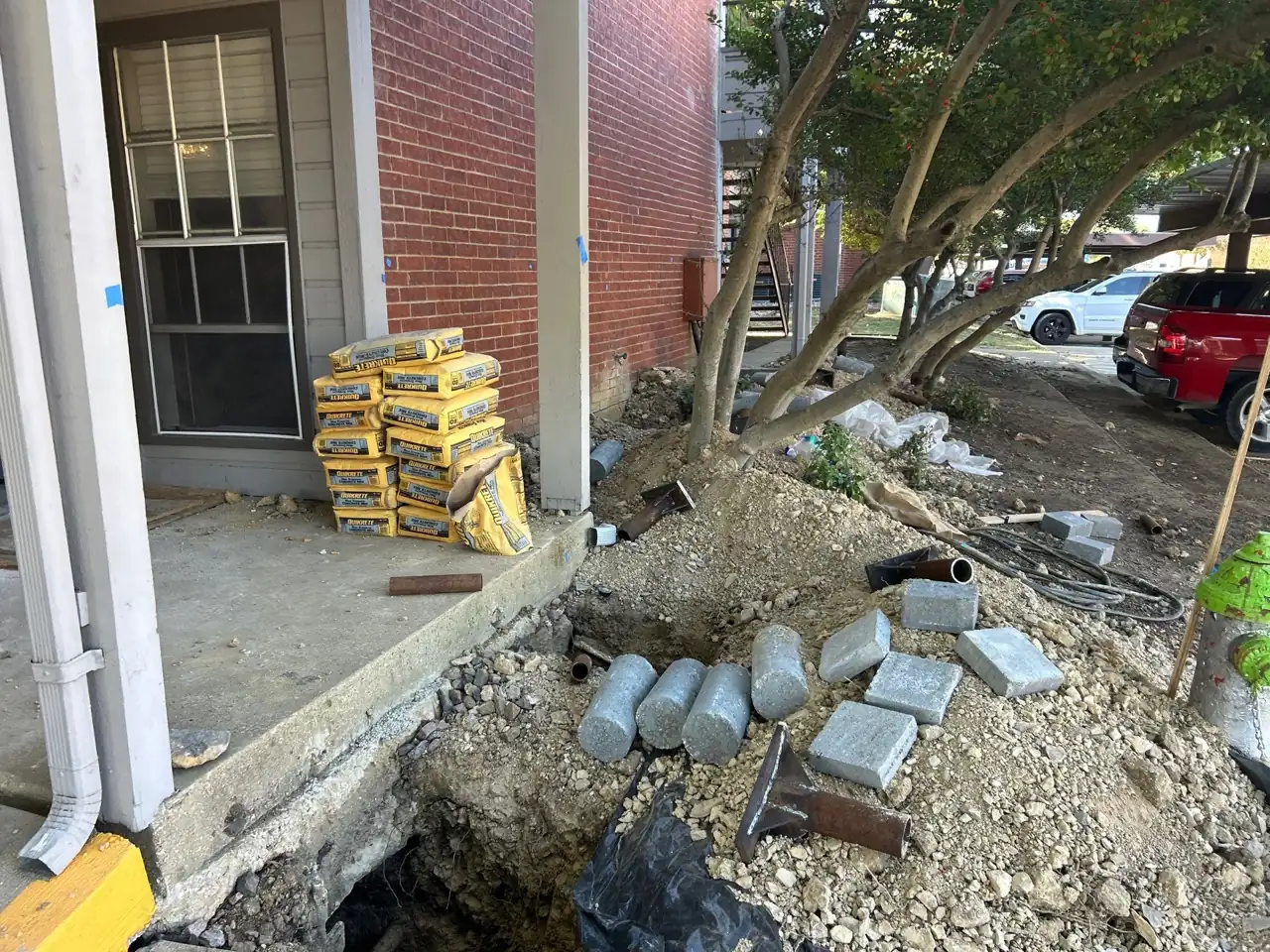
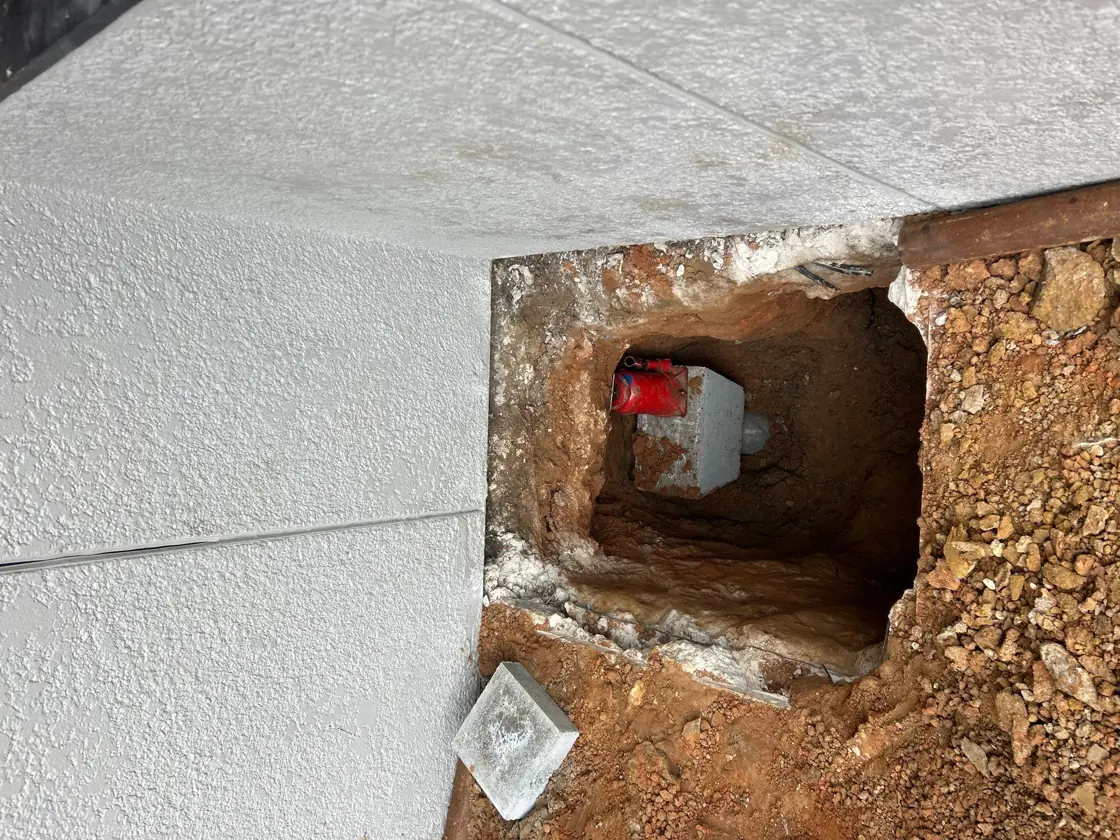
Installed around your operations
Steel pier installation is compact work: pit excavation at each location, hydraulic driving, lift, and closure. That footprint suits occupied properties, and scopes are phased by building, wing, or schedule window so tenants and operations continue. Our crews self-perform the installation, and elevations are documented before and after for ownership records.
Documented commercial steel pier work
Our portfolio includes steel pier installation supporting a working hotel structure and the N Stemmons steel pier project, both documented with conditions, scope, and results. Deep excavation, real loads, buildings that stayed in business while we worked under them.
The deliverable on any commercial steel pier project is engineered bids: pier layout, the reasoning behind it, and documentation suitable for ownership review. Work carries a workmanship warranty, terms vary by service.
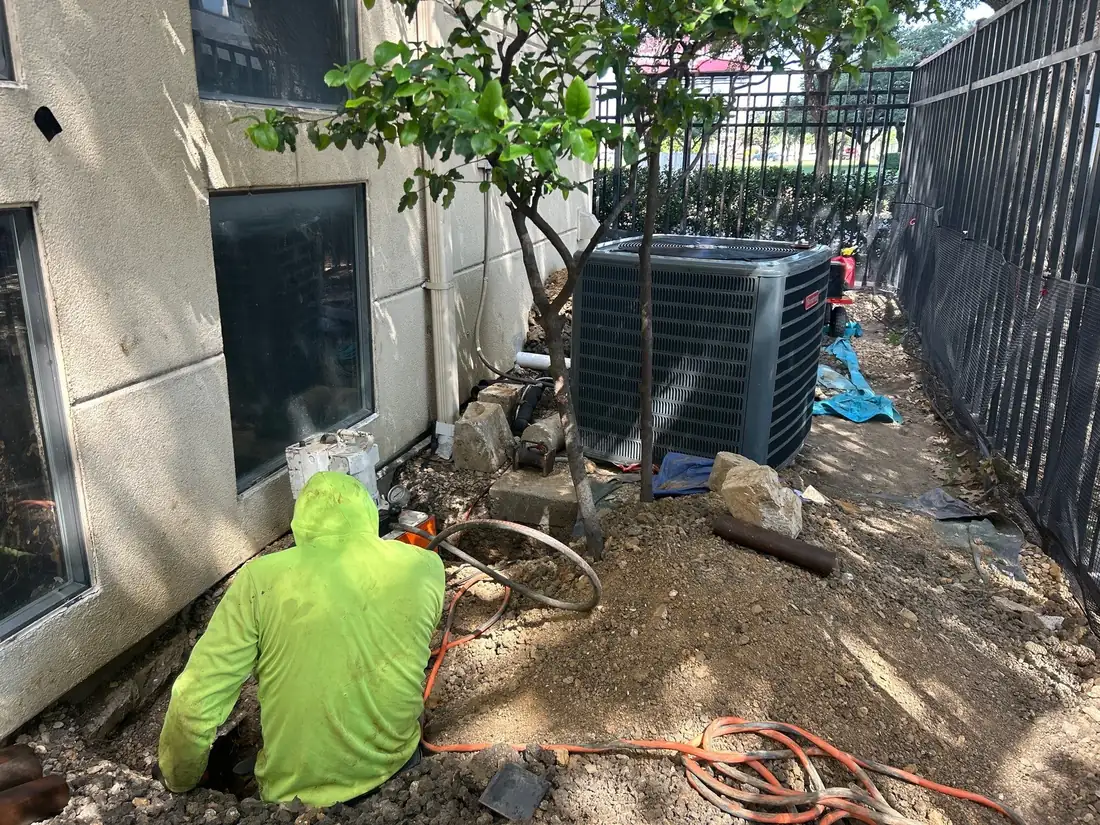
Cardinal performs this work across Dallas-Fort Worth, with larger commercial and specialty projects statewide.
Frequently asked questions
Capacity depends on pier specification and the strata it bears on, verified during driving. Commercial layouts are designed from the structure's actual loads, not a standard spacing chart.
Yes. Interior installations run through slab access pits with containment, commonly overnight or in phased sections to keep the property operating.
Steel excels in deep compression support under heavy loads; helical systems add tension capacity and shine in poor surface soils and tieback applications. Many commercial scopes use both where conditions vary.
Start with an engineer
Tell us about your property and we will schedule a no-obligation inspection or assessment. Your request routes to the right team: commercial, residential, or new construction.