
Owners & PMsCommercial ▾
HomeownersResidential ▾
Builders & GCsNew Construction ▾
GuidesResources ▾
CompanyAbout ▾
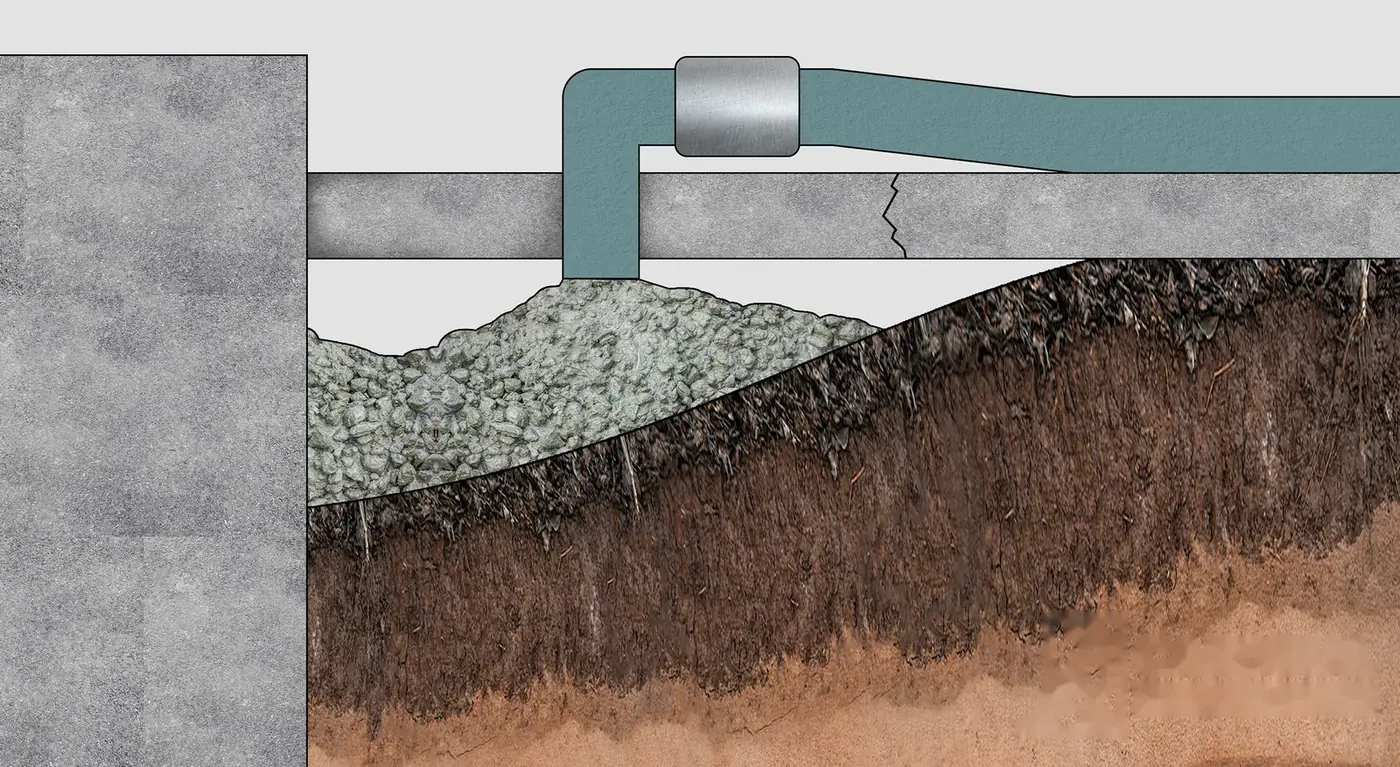
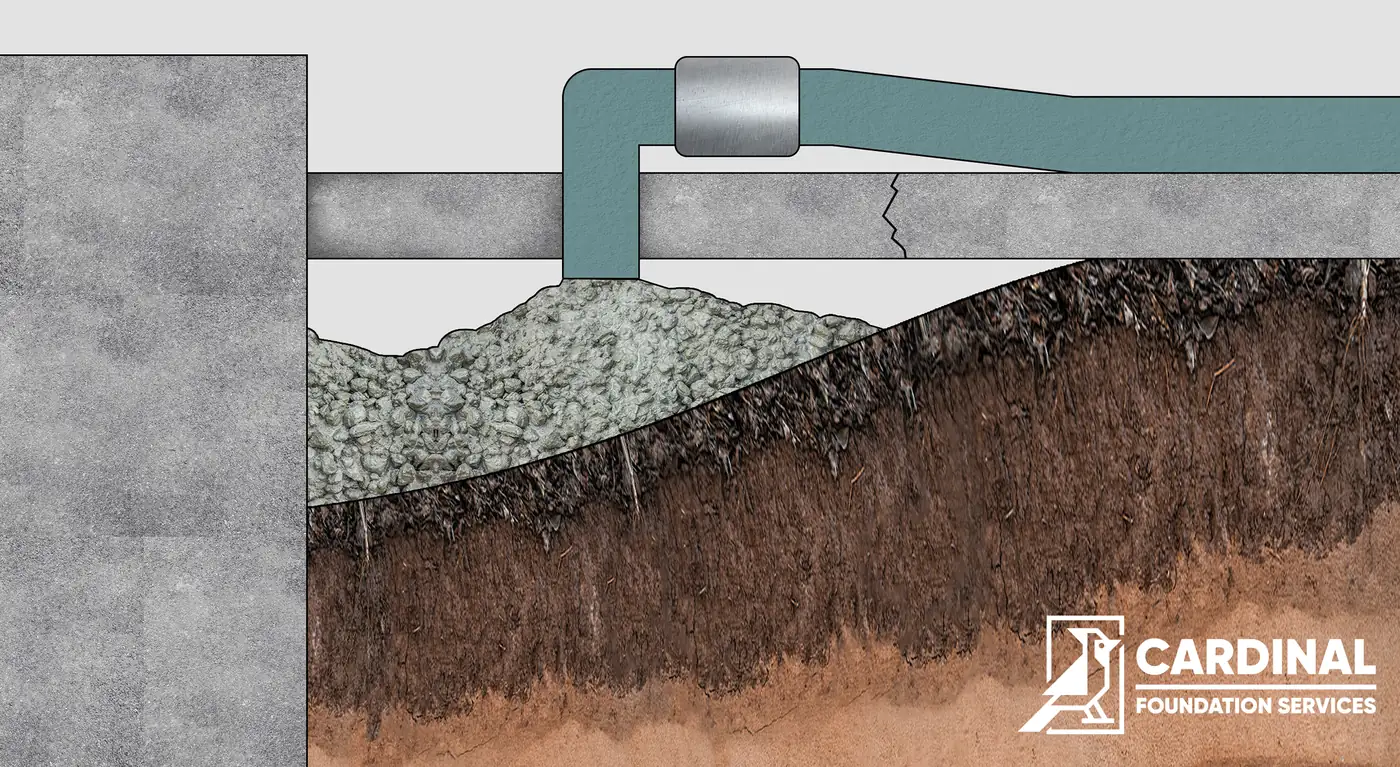
How mudjacking works
Ports are drilled through the settled slab, and the slurry is pumped beneath it under controlled pressure. The material fills the voids that allowed the drop, then lifts the slab toward level. Once cured, the slurry forms a dense, stable base under the concrete. The slab you already paid for goes back to work, at a fraction of replacement cost.
Where mudjacking fits at homes
Mudjacking or foam?
Mudjacking uses a heavier traditional slurry and larger ports; polyurethane foam is lighter, cures in minutes, and uses smaller ports at a higher material cost. One is not universally better. Slab condition, soil, access, and budget pick the method, and since Cardinal installs both, the recommendation is about your slab rather than our truck. The foam page covers the other side of the comparison.
As with all lifting work: if the settlement is being driven by drainage failure or foundation movement, the evaluation identifies it, because the durable fix addresses the cause.
Residential work carries a transferable workmanship warranty, terms vary by service, with financing available and a written quote within one business day.
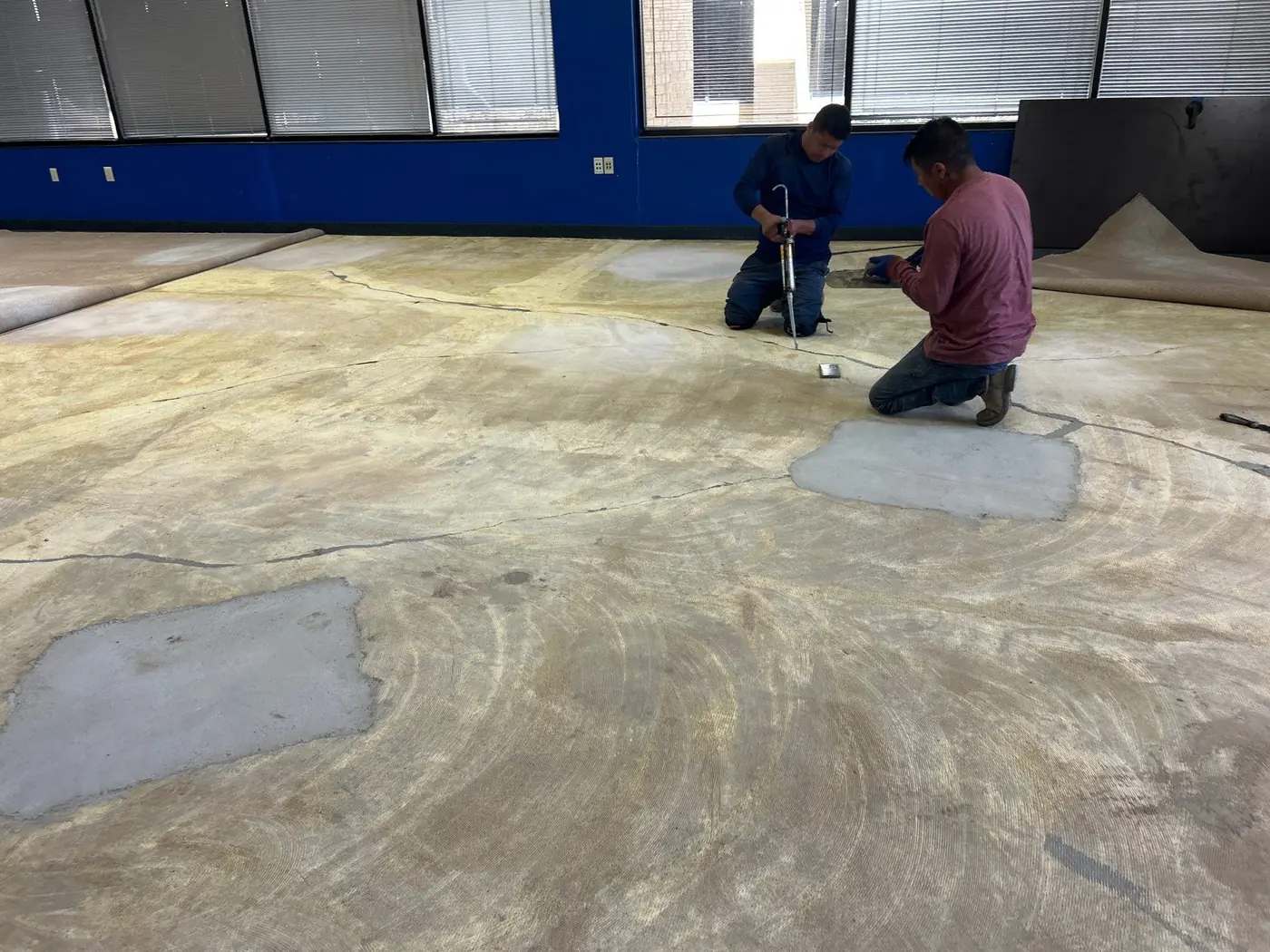
Cardinal performs this work across the Dallas-Fort Worth Metroplex and the Houston area.
Frequently asked questions
Substantially, in typical cases, because the existing slab is preserved rather than demolished and repoured.
The slurry base is stable for the long term. Service life depends on the soil and water conditions beneath, which is why cause correction is part of our evaluation.
Mudjacking slurry needs cure time before heavy loads, typically a day or more depending on conditions. Foam is the faster-return option when same-day traffic matters.
Heavily fractured slabs may not lift cleanly and are evaluated honestly: sometimes lifting is right, sometimes partial replacement is the better spend.
Start with an engineer
Tell us about your property and we will schedule a free, no-obligation inspection. Your request routes to the right team: commercial, residential, or new construction.